
What does it take to get cited by ChatGPT?
Three things, in this order. ChatGPT's retrieval layer has to hold a usable copy of your page. The page has to answer the question the assistant actually asked, which is rarely the one you targeted. And it has to carry something the answer cannot absorb. Most B2B sites fail the first test, assume they failed the third, and spend the budget on the second.
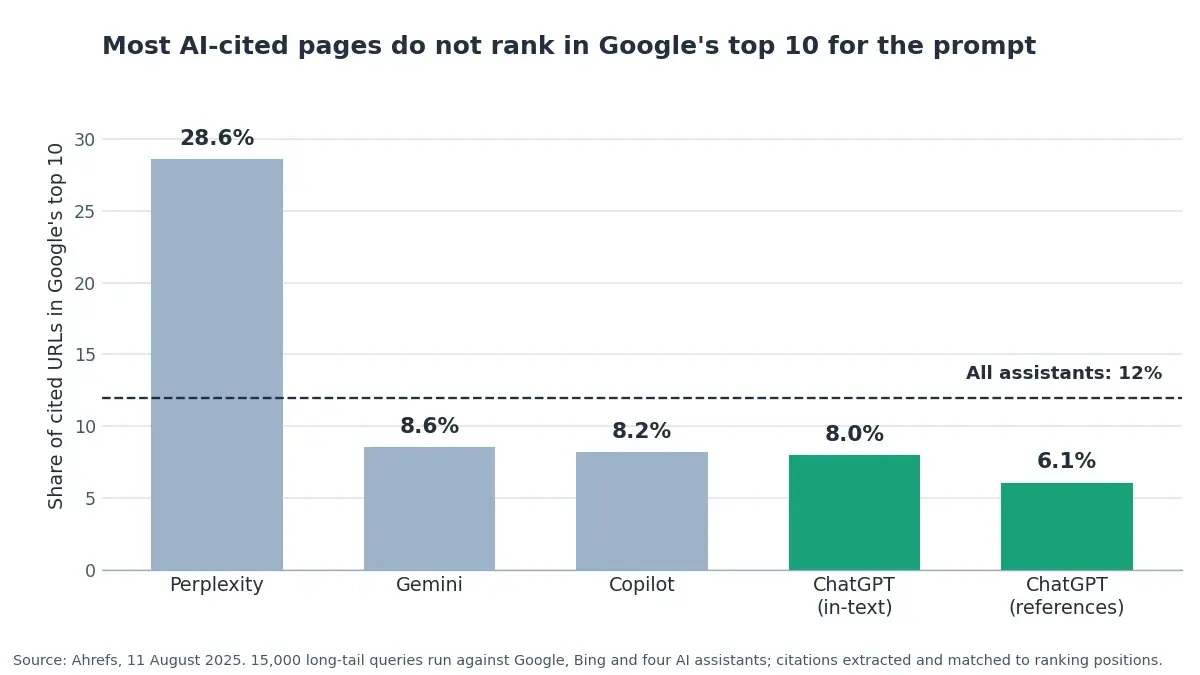
The prevailing model is that getting cited by ChatGPT is search engine optimization with extra structured data bolted on. Two pieces of evidence break that model. Google states in its own documentation that no special schema exists for its AI features. And when Ahrefs matched AI citations against search rankings, only 8% of the URLs ChatGPT cited in-text were ranking in Google's top 10 for the prompt that produced them.
So the mechanics are different, and they are documented well enough to work with. This piece walks the retrieval path as it currently behaves, names the one crawler that decides your eligibility, and hands you a seven-test check you can run on your own site this week. For the cross-engine version of the same question, work through the twelve-check citability audit.
What you'll learn:
- The two retrieval paths behind a ChatGPT answer, and why one of them never opens your page
- Which of OpenAI's three crawlers controls citation eligibility, and which one you can safely block
- What Google actually says about schema markup and AI features, in its own words
- Why most cited pages do not rank for the prompt that cited them
- A seven-test citability check with pass thresholds, run against your own domain
Key Takeaway
Citation eligibility is decided before any of your content quality work matters. If OAI-SearchBot cannot reach the page, nothing downstream of that is worth doing. Check the crawler first, the writing second.
How does ChatGPT actually find and read a page?
Through two separate paths that behave almost nothing alike. The fast path answers from an index and a cache without opening a single page. The slower reasoning path goes out and fetches. Which one runs depends on the mode the user is in, and you have no control over that choice.
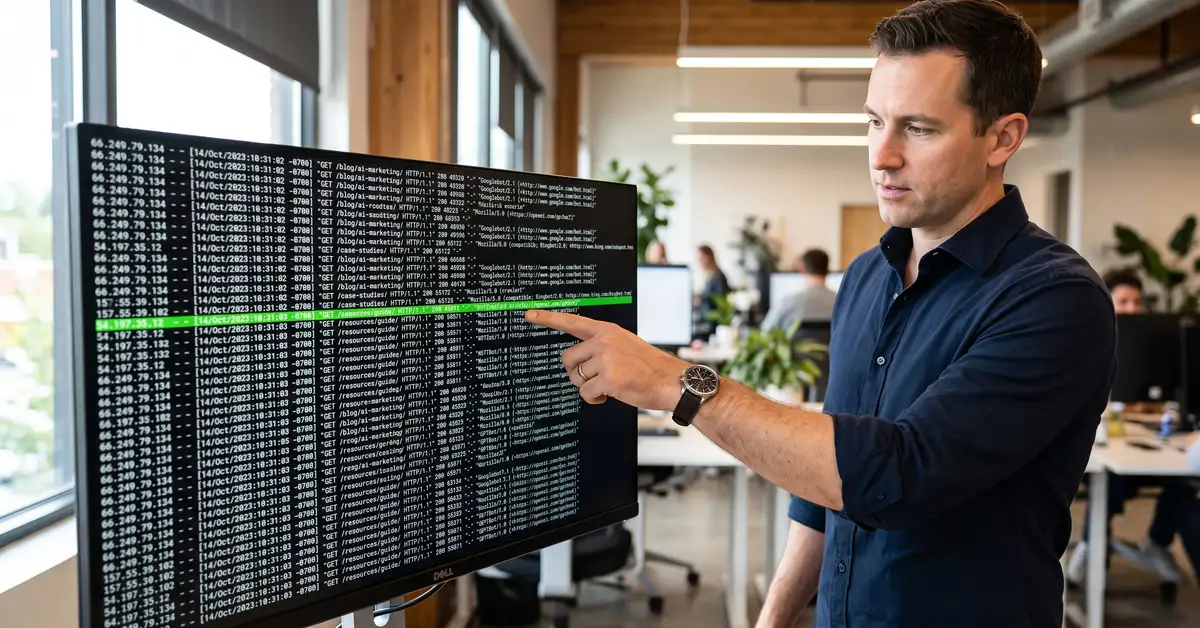
The most detailed public reconstruction of the stack was published by Olivier de Segonzac of RESONEO in Search Engine Land on 17 August 2026, built from 1,200 ChatGPT answers, 88,000 search results and 26,900 distinct pages, plus canary pages with server logs to see what OpenAI's robots actually fetched. Four findings matter for a publisher.
First, OpenAI runs its own index, and it is not Bing. The study found only 1.5% of URLs from that index appearing in Bing's top 20, and no matching snippets. The "get indexed in Bing and ChatGPT follows" advice that circulated through 2025 has no support in this data.
Second, there is a cache holding full pages converted from HTML to Markdown, refreshed roughly every 30 minutes for pages people ask about often and much less for everything else. The cache ignores your Cache-Control header and your noindex.
Third, in 93% of instant-mode answers, no page is opened at all. The answer is assembled from index entries and cached text.
Fourth, there is a hard 4 MB page ceiling. Oversized pages are rejected outright.
De Segonzac is careful about the shelf life of all this, and so are we: "Every specific mechanism we documented can be gone by the time you deploy." Treat the specifics as a snapshot of August 2026 and the direction as durable.
The direction is what changes your work. If the assistant does not open your page in most answers, the unit that gets cited is the indexed extract, not the article. The 40 to 60 words sitting directly under each heading are carrying the citation. Everything below them is carrying the click, which is a separate job. We separate those two jobs deliberately in how LLMs decide what to cite.
| Retrieval path | What happens | What it rewards |
| Instant answer | Answer assembled from OpenAI's own index plus cached page text. No fetch in 93% of cases. | A self-contained answer in the first lines under each heading. Being in the index at all. |
| Reasoning or browsing | Pages are fetched live by ChatGPT-User, converted and read. | Server-rendered HTML, fast response, page under 4 MB, no JavaScript dependency. |
Source: RESONEO analysis published in Search Engine Land, 17 August 2026. Observational, not confirmed by OpenAI.
Which OpenAI crawler decides whether you can be cited?
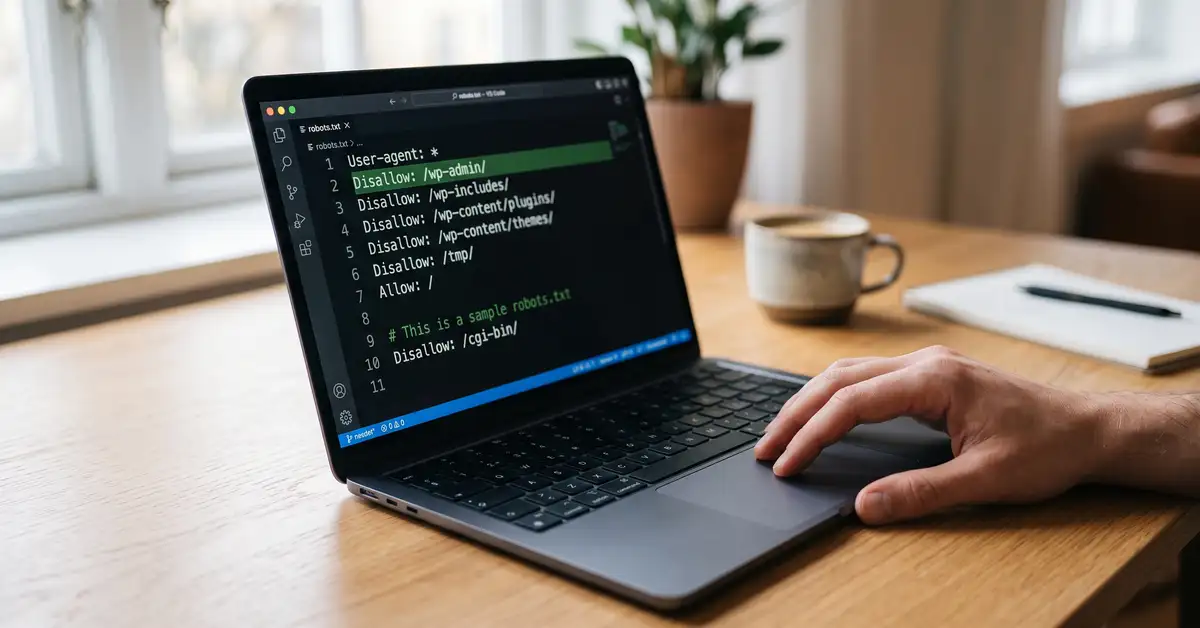
OAI-SearchBot, and almost nobody blocks it on purpose. OpenAI runs three user agents with three different jobs, and the names give no clue which one matters. GPTBot collects training data. OAI-SearchBot builds the search index. ChatGPT-User fetches a page live when a user's question sends it there.
OpenAI revised this documentation in December 2025 to separate the roles more sharply. PPC Land documented the changes: OAI-SearchBot is described as being "for search, used to surface websites in search results", and the language tying it to training data was removed. The revision also added a line about ChatGPT-User that most compliance teams have not read yet: "Because these actions are initiated by a user, robots.txt rules may not apply."
Here is where it costs money. A legal or brand team decides the company should not feed AI training. Somebody writes a robots.txt rule. The rule is written against "OpenAI" or pasted from a block-the-AI-bots listicle, and it lands on all three agents. Training is now blocked, which was the goal, and the domain has also quietly left the citation pool, which was not. Nothing breaks. No alert fires. Rankings are unaffected. The brand simply stops being available to name.
Blocking GPTBot on its own has no effect on whether ChatGPT can cite you. If the policy question is training, block GPTBot and leave the other two alone.
| User agent | Job | Effect of blocking it |
| GPTBot | Collects training data for future models | No effect on ChatGPT citations. This is the safe one to block. |
| OAI-SearchBot | Builds the index used to surface sites in ChatGPT search | Removes your pages from the citation pool. Rarely intended. |
| ChatGPT-User | Fetches a page live when a user's request requires it | Kills live retrieval. OpenAI notes robots.txt may not apply here. |
Verified OAI-SearchBot user agent string, for grepping your logs: Mozilla/5.0 AppleWebKit/537.36 (KHTML, like Gecko); compatible; OAI-SearchBot/1.0; +https://openai.com/searchbot (Cloudflare Radar bot directory).
Want the answer before you run the checks?
We measure how often ChatGPT, Gemini, Claude and Perplexity name your company for your category's buying questions, and which competitors they name instead. Free, inside 48 hours.
Get your AI visibility measurementDoes schema markup get you cited by ChatGPT?
No, and Google says so in writing. Its documentation on AI features states: "There are no additional requirements to appear in AI Overviews or AI Mode, nor other special optimizations necessary." It goes further and closes the specific question directly: "You don't need to create new machine readable files, AI text files, or markup to appear in these features. There's also no special schema.org structured data that you need to add."
That is Google's own guidance on AI features, and it applies to AI Overviews and AI Mode. OpenAI publishes no equivalent schema requirement either. Every "FAQPage schema lifts citations by 47%" figure in circulation traces back to a vendor blog citing another vendor blog, and the trail ends without a study.
A correction is owed on this page. An earlier version of this article carried a table of schema types with citation-lift percentages attached, and a claim that schema-marked content is cited 3.2 times more often. We could not trace any of those numbers to a primary source, so they are gone. The table looked authoritative and was not, which is exactly the failure mode our 23-check publication standard exists to catch.
What schema still earns is narrower and real. It states entity relationships in a form a machine reads without inference, it drives rich results in classic search, and it keeps author and publisher attribution unambiguous. Those are good reasons. Citation lift is not one of them, and the practical detail behind that sits in schema markup and AI citation.
Where the time actually goes
Teams reach for schema because it is a task with a definition of done. The work that moves citations has no such comfort: rewriting the first 60 words under every heading so they answer without the paragraph above them.
Why do most cited pages not rank in the top 10?
Because the assistant does not search your query. It decomposes the question into several narrower ones, retrieves against those, and assembles an answer from whatever surfaces. This is query fan-out, and it is why ranking position and citation have come apart.
Ahrefs ran 15,000 long-tail queries through Google, Bing and four assistants on 11 August 2025, extracted every citation, and matched each one back to its ranking position. Across all assistants, 12% of cited URLs ranked in Google's top 10 for the original prompt. ChatGPT sat below that average on both citation types.
The same decoupling is visible inside Google itself, and it is moving fast. Ahrefs analysed 863,000 keyword SERPs and 4 million AI Overview URLs and published the result on 2 March 2026: 37.9% of AI Overview citations came from pages ranking in the top 10, down from roughly 76% in July 2025. The rest split almost evenly between positions 11 to 100 and beyond position 100.
Read that as a strategy instruction. Ranking first for your head term is worth having and no longer buys the citation. What buys the citation is covering the decomposition: the narrower questions a buyer's real prompt breaks into, each answered somewhere you control. That is the difference between optimising a page and building for AI search, and it is why we measure share of model rather than position.
The ChatGPT citability check: seven tests, run them this week

Run these against one page that should be cited and is not. Each test is pass or fail, one point per pass. Nothing here needs a tool you do not already have, and the whole thing takes about an hour. Score at the bottom.
Seven tests
1. Is OAI-SearchBot allowed in robots.txt?
Open yourdomain.com/robots.txt and read every block, including the wildcard one. Look for Disallow rules that catch OAI-SearchBot, whether by name or through User-agent: *. A Disallow: / under a wildcard with no OAI-SearchBot exception is a fail.
Pass: OAI-SearchBot can reach the page. Fail: anything blocks it. Fix this before doing anything else on the list.
2. Has OAI-SearchBot or ChatGPT-User fetched the page in the last 30 days?
Grep your server or CDN logs for OAI-SearchBot and ChatGPT-User. Robots.txt saying yes and the logs saying nothing are two different states, and the second one is the one that matters. Firewall rules, bot-management defaults and rate limits all block crawlers without touching robots.txt.
Pass: at least one fetch of this URL in 30 days. Fail: zero. Check your WAF's bot category settings next.
3. Is the page under 4 MB and readable without JavaScript?
Disable JavaScript in your browser and reload. If the body copy disappears, the retrieval layer sees what you just saw. Then check total page weight: the observed hard ceiling is 4 MB, above which the fetch is rejected outright.
Pass: full text present with JavaScript off, page under 4 MB. Fail: either condition missed.
4. Does each H2 answer its own question in the first 40 to 60 words?
Take any H2 and read only the sentences directly beneath it. If those sentences need the paragraph above them to make sense, they cannot be lifted, and lifting is the entire mechanism in instant mode. Check every heading, not just the first.
Pass: every H2 is followed by a self-contained answer. Fail: two or more headings open with context or throat-clearing.
5. Does the page survive query fan-out?
Do not test your head term. Write the five narrower questions a buyer's real prompt would decompose into, ask each one in ChatGPT, and note whether your domain appears in any answer. Fan-out is where citations are actually won, and a page that only answers the head term has one entry point instead of five.
Pass: cited on two or more of five. Fail: one or zero.
6. Does the page carry something an answer cannot copy?
Ask ChatGPT your target question and read the answer next to your page. If the answer contains everything the page contains, the page has no reason to be opened even when it is cited. A calculator, a dataset, a diagnostic, a template or a defensible verdict survives the summary. Prose does not.
Pass: at least one element on the page cannot be restated in three sentences. Fail: the answer replaces the page.
7. Is your brand named at all for the category question?
Step away from the page and ask the buying question your category actually gets asked, the one with no brand in it. Record which companies get named. This is your baseline, and it is the number that moves when the other six are fixed.
Pass: named in the answer. Fail: named competitors, no you.
| Score | What it means | What to do first |
| 6 to 7 | Eligible and structured. Citation volume is now a coverage problem. | Expand fan-out coverage across the cluster rather than editing this page again. |
| 4 to 5 | Reachable but not quotable. The page is being passed over, not blocked. | Rewrite the opening 60 words under every heading, then re-run tests 5 and 7. |
| 0 to 3 | Likely an access problem wearing a content problem's clothes. | Fix tests 1 and 2 first. Content work before that is wasted. |
What is a ChatGPT citation actually worth?
Very little traffic and disproportionate revenue. Both halves of that are measured, and holding them together is what makes the business case survive a CFO.
Andy Crestodina of Orbit Media analysed 28.9 million sessions across 97 B2B and lead-generation sites between July 2025 and June 2026. AI-referred visits converted on high-intent actions at 1.91%, against 0.50% for Google organic. ChatGPT specifically reached 2.08%. And AI accounted for 0.5% of total visits, roughly 140,000 sessions out of 29 million, with ChatGPT making up 82.3% of that slice. Both numbers come from the same dataset, and quoting either one alone produces a misleading argument.
The volume side is not recovering. Pew Research tracked 68,879 real Google searches by 900 US adults in March 2025: 8% of searches with an AI summary produced a click on a result, against 15% without one, and 1% clicked a link inside the summary itself. SparkToro and Similarweb measured 68.01% of US Google searches ending without any click between January and April 2026. Ahrefs measured a 34.5% lower click-through rate for top-ranking pages on informational queries carrying an AI Overview.
So the click is leaving and the mention is what remains. The mention happens whether anyone clicks or not, which is why we treat it as a share of a fixed pool rather than a traffic channel. That argument, and the objection it usually meets, is worked through in AI is only 2% of my traffic and sits alongside the pattern in impressions up, clicks down.
For what the upside looks like when the access problems are cleared and the coverage work is done, one client moved from near zero to 250 AI-sourced visits a quarter, a factor of 83, inside 90 days. The method, and its limits, are in the Helium42 case study. Category-level baselines for what normal looks like are in our AI visibility benchmarks, and the wider discipline sits under answer engine optimization.
Frequently asked questions
How do I get ChatGPT to cite my website?
Make the page reachable by OAI-SearchBot, then make it quotable. Reachable means no robots.txt or firewall rule blocking that specific agent, server-rendered text, and a page under 4 MB. Quotable means every H2 is followed by a self-contained answer of roughly 40 to 60 words that survives being lifted out of the page. Those two steps cover the failures we see most often. After that it becomes a coverage problem, because ChatGPT retrieves against decomposed sub-questions rather than your target keyword.
Does blocking GPTBot stop ChatGPT from citing me?
No. GPTBot collects training data for future models. The agent that governs whether your pages can appear as sources in ChatGPT search is OAI-SearchBot, and OpenAI's documentation describes it as being for search, used to surface websites in search results. The expensive mistake is a blanket rule aimed at training that catches all three OpenAI agents, which removes the domain from the citation pool without breaking anything visible.
Do I need schema markup to get cited by ChatGPT?
No. Google's documentation on AI features states there is no special schema.org structured data needed to appear in them, and OpenAI publishes no schema requirement at all. Schema is still worth having for entity clarity, rich results in classic search and unambiguous author attribution. Treat the widely quoted schema citation-lift percentages with suspicion, because they generally trace back to vendor blogs quoting other vendor blogs rather than to a study.
Why does my page rank first on Google but never get cited?
Because the assistant is not running your query. It breaks the question into narrower ones and retrieves against those. Ahrefs found that only 12% of AI-cited URLs ranked in Google's top 10 for the original prompt, and only 8% for ChatGPT's in-text citations. Inside Google's own AI Overviews, citations from top 10 pages fell from about 76% in July 2025 to 37.9% by March 2026. Ranking helps and no longer decides the outcome.
How long does it take to get cited by ChatGPT after fixing this?
Access fixes can show up quickly, because a page that was blocked starts being fetched as soon as the rule changes and re-crawl frequency follows how often people ask about the topic. Coverage work is slower, because it means publishing answers to the decomposed questions rather than editing one page. Set the baseline before you start, measure which companies get named for your category's buying questions, and re-measure on a fixed schedule instead of checking daily.
Is ChatGPT traffic worth optimizing for if it is under 1% of visits?
The traffic argument is the wrong one to make, and it is the argument that loses. Across 97 B2B sites, AI referrals were 0.5% of visits and converted at 1.91% on high-intent actions against 0.50% for Google organic. The bigger effect sits outside your analytics entirely: the buyer who hears three vendor names in an answer and never clicks any of them has still been influenced. That is a share of a fixed pool, and shares are zero-sum.
Sources
- Google Search Central: AI features and your website, on requirements and structured data for AI Overviews and AI Mode.
- Ahrefs, 11 August 2025: 15,000 long-tail queries, citation-to-ranking overlap across four assistants.
- Ahrefs, 2 March 2026: 863,000 SERPs and 4 million AI Overview URLs, top 10 citation share over time.
- Olivier de Segonzac, RESONEO, in Search Engine Land, 17 August 2026: ChatGPT retrieval stack, index, cache and pages opened. Observational research, not confirmed by OpenAI.
- PPC Land, 9 December 2025: what changed in OpenAI's crawler documentation, with the revised wording for each agent.
- Cloudflare Radar bot directory: verified OAI-SearchBot operator and user agent string.
- Orbit Media, 22 July 2026: 97 B2B sites, 28.9 million sessions, AI referral conversion rates by source.
- Pew Research Center, 22 July 2025: 68,879 tracked searches, click behaviour with and without AI summaries.
Find out what the engines currently say about you
We measure how often ChatGPT, Gemini, Claude and Perplexity name your company for your category's buying questions, which competitors get named instead, and which pages the engines are actually citing. You get the measurement and the evidence behind it before any conversation about work.
Get your AI visibility measurement