

What Is AI Search Optimization and Why Does It Matter for B2B?
AI search engines are fundamentally changing how B2B buyers discover solutions—and traditional SEO strategies are no longer enough. Perplexity, ChatGPT Search, and Google's AI Overviews now handle billions of queries monthly, and being visible across these platforms has become essential for any B2B company looking to capture market share. Unlike traditional search engines that return ranked links, AI search engines synthesize information and cite only the most authoritative, relevant sources—which means optimization requires a completely different approach.
The shift is happening fast. Research on AI platform citation patterns shows that Perplexity cites 8,027 unique domains compared to ChatGPT's 2,127, yet both platforms heavily favor recency, expertise, and comprehensive answers. Companies that understand answer engine optimization (AEO) principles are already capturing disproportionate traffic—some reporting 3x higher conversion rates from AI search referrals compared to traditional organic search.
This guide walks you through the specific tactics that drive citations in Perplexity, ChatGPT Search, and Google AI Overviews. You'll learn how to structure content for AI consumption, earn citations from high-authority platforms, and convert AI-driven traffic into qualified leads—regardless of whether you're a SaaS founder, staffing agency, or executive coach.
What you'll learn in this guide:
- How AI search engines decide which sources to cite
- The content structures that rank highest in Perplexity and ChatGPT
- Specific B2B optimization strategies for each platform
- How to earn citations and establish authority
- Data-backed tactics for answer engine optimization
- How to measure and improve your AI search visibility
Key Takeaway
AI search engines prioritize recency, comprehensiveness, and expertise over traditional SEO ranking factors. B2B companies optimizing for AI search now are capturing disproportionate traffic—with conversion rates 3x higher than traditional organic. This is your competitive advantage window.
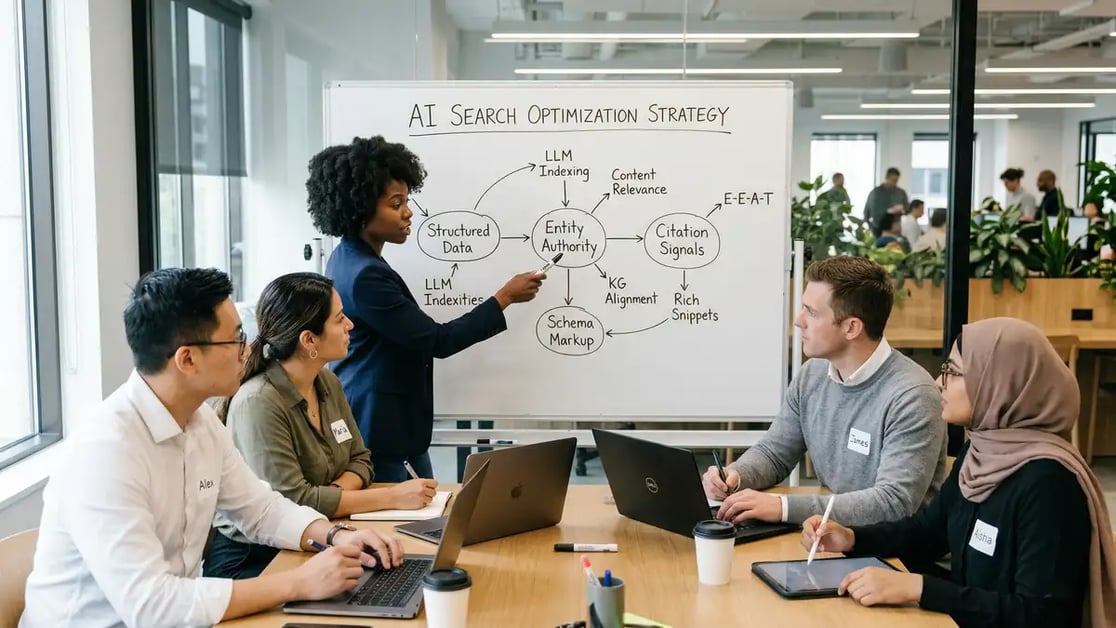
How AI Search Engines Decide Which Sources to Cite
AI search engines don't rank pages—they cite sources. This distinction is critical. When you search Perplexity or ChatGPT Search, the engine generates an answer and embeds citations from specific sources it deems authoritative for that query. Your goal isn't to rank #1; it's to be cited as a trusted source.
The citation algorithm weights several factors:
Recency. Data from B2B SaaS citation benchmarks for 2026 reveals that 60.5% of ChatGPT's most-cited pages were published within the last two years. Perplexity shows similar patterns. Fresh content gets prioritized because AI engines reward current information.
Expertise and Authority (E-E-A-T). 96% of AI Overview citations come from sources with strong expertise, experience, authoritativeness, and trustworthiness signals. This means bylines matter, author bios matter, and verifiable credentials matter more than ever.
Comprehensiveness. Pages cited in AI search tend to answer questions thoroughly. AEO implementation research shows that pages with 120-180 words between headings see 70% more citations. Short answers don't cut it.
Domain Authority and Citation History. While traditional SEO relies on backlinks, AI search engines track which domains have been cited historically. Building a citation history takes time, but it compounds.
| Factor | Weight in AI Citation | B2B Application |
| Recency (within 2 years) | Very High | Update all cornerstone content quarterly |
| E-E-A-T signals | Very High | Include author bios, credentials, case studies |
| Comprehensiveness (120-180 words/section) | High | Expand sections and provide detailed answers |
| Internal link structure | High | Link to related pillar and cluster content |
| FAQ schema markup | Medium-High | 3.2x more likely in AI Overviews with schema |
| Backlinks and domain authority | Medium | Earn links from high-authority B2B sources |
Sources: Averi B2B SaaS Citation Benchmarks 2026, Rellify AEO Implementation
Key Takeaway
Being cited in AI search is different from ranking in Google. Focus on recency, comprehensive answers, strong E-E-A-T signals, and domain authority—not traditional link velocity. Pages optimized for AI citation often earn 3.2x more visibility in AI Overviews when combined with proper schema markup.
The 4 Pillars Playbook breaks down the entire framework with deployment maps, KPIs, and real case studies across SaaS, recruiting, and coaching.
Open the Interactive PlaybookHow to Optimize Content for AI Search: The Core Tactics
Content optimization for AI search requires a different playbook than traditional SEO. While SEO still matters (most AI engines use traditional search index data), the ranking and citation criteria diverge significantly. Here's what works:

1. Answer questions comprehensively, not broadly. AI search engines reward narrow, deep answers over broad overviews. Instead of "What is SaaS marketing?", write "How to measure product-led growth in B2B SaaS companies with <$5M ARR." Narrow answers get cited more often because they address specific user intent.
2. Use consistent heading hierarchy and section length. Pages cited in AI Overviews follow strict heading structures (H2 → H3 → H4) with 120-180 words between headings. This gives the AI engine scannable, digestible chunks of information. Random heading structures and 300-word sections perform worse in AI citation.
3. Lead with the answer, then support it. Answer the H2 question in the first 1-2 sentences of each section. Don't bury answers in paragraphs. AI engines extract direct answers and need them front-and-center.
4. Include multiple content formats. Multimodal content (images, tables, infographics, video embeds) gets selected 156% more often in AI Overviews than text-only pages. If you're writing about optimization tactics, include step-by-step screenshots or infographics.
5. Implement FAQ schema and structured markup. FAQ schema increases the likelihood of appearing in AI Overviews by 3.2x. Use schema.org/FAQPage markup for your FAQ sections. AI engines can parse structured data more reliably than unstructured text.
6. Build topical authority through internal linking. Link to related content in your B2B content strategy and generative engine optimization resources. AI engines track topical depth. If you write 50 pages about SaaS, ChatGPT and Perplexity treat your domain as an authority on that topic.
7. Update content frequently. Recency signals matter significantly. Update publish dates when you refresh sections, add new data, or expand answers. GEO and AEO strategy for B2B requires content that stays current with industry trends and emerging data.
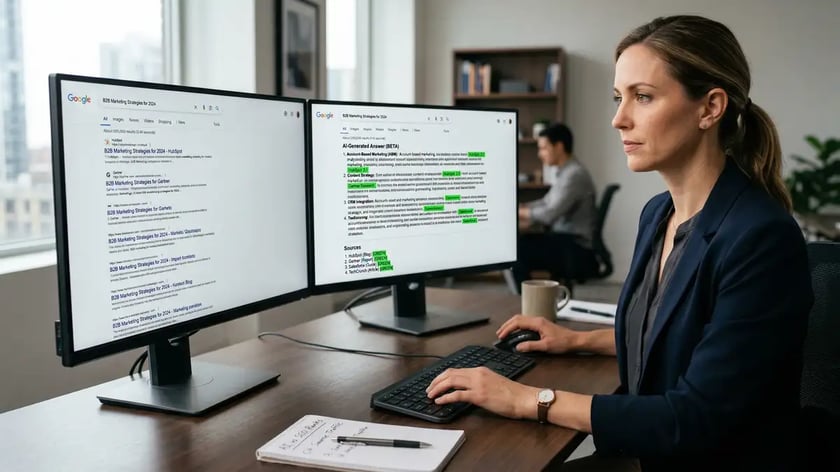
Perplexity vs. ChatGPT Search: Platform-Specific Strategies
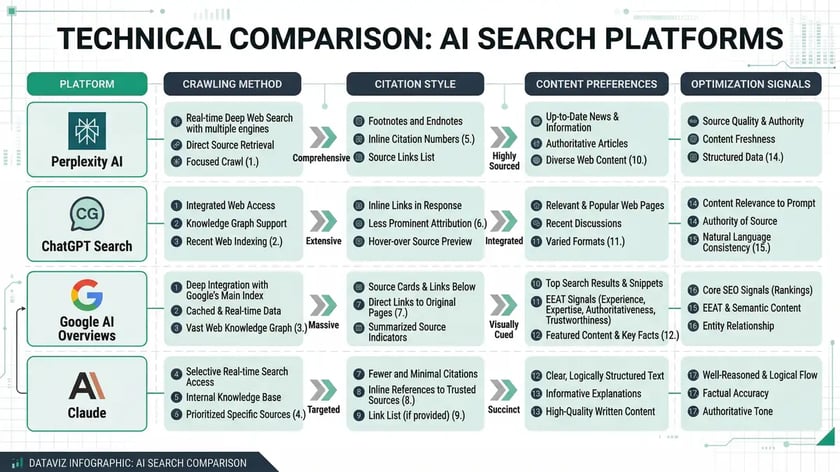
Perplexity and ChatGPT Search have different citation algorithms. Understanding these differences lets you allocate optimization effort where it matters most for your audience.
| Platform | Monthly Queries | Citation Pattern | B2B Advantage |
| Perplexity | 780M queries/month | Cites 8,027 unique domains; favors breadth | Easier to get cited; lower domain authority barrier |
| ChatGPT Search | 2B queries daily | Cites 2,127 domains; favors premium/authority | Higher barrier but more qualified traffic |
| Google AI Overviews | 11%+ of all queries | Blends SEO rankings with AEO signals | Largest reach; traditional SEO still valuable |
Sources: ChatGPT vs Perplexity vs Google Comparison, Tryprofound AI Citation Patterns
Optimizing for Perplexity
Perplexity cites more domains and shows greater domain diversity. This is your biggest advantage. Complete AEO implementation guides show that even newer domains can earn Perplexity citations if content is comprehensive and well-structured.
Perplexity also tracks user engagement patterns. If a user clicks your link in a Perplexity answer, that signal may influence future citations. This means—optimize landing pages for click-through. Don't just optimize the content for AI; make sure the user actually wants to click through when they see your citation.
Perplexity users spend more time per session (13 pages vs. 11.8 from Google), which means they're more engaged and deeper in the research process. This is valuable for B2B companies selling high-consideration products. If your company serves SaaS CEOs or VP-level buyers, Perplexity traffic often converts better than general Google traffic.
Optimizing for ChatGPT Search
ChatGPT Search is more selective and favors established brands. The premium ChatGPT model (which most search users rely on) cites brand websites 56% of the time, while the default model only cites them 8% of the time. This is a significant barrier—but also means less competition for qualified traffic.
Recency is critical for ChatGPT. 60.5% of ChatGPT's most-cited pages published within two years means you need to commit to content updates. Stale content gets deprioritized quickly.
ChatGPT also appears to weight official brand sources higher. If your company is interviewed in a publication, that citation carries weight. Conversely, if a third-party article mentions your product or service, that also counts as a citation opportunity. Proactively pitch to relevant industry publications.

The 6-Step Process to Earn AI Search Citations
Identify High-Intent AI Search Keywords
Use tools like SEMrush, Ahrefs, or DataForSEO to find keywords where AI Overviews appear or where ChatGPT/Perplexity typically generate answers. Look for "how to" and "what is" queries—these are citation magnets. Filter for keywords with B2B intent in your industry. You're looking for queries where business buyers are seeking solutions.
Audit Current Citations and Competitors
Search your target keywords in ChatGPT, Perplexity, and Google AI Overviews. Note which domains are cited, what angle they use to answer the question, and how comprehensive their answer is. If your competitor is cited but you're not, your content likely needs to be more comprehensive, more recent, or structured differently. Reverse-engineer the citation-winning answer.
Create Comprehensive, Narrow Answers
Write content that answers the specific question deeply. Use 120-180 words per section, include multimodal content (images, tables, infographics), and structure with proper heading hierarchy. Lead with the answer. Make sure your E-E-A-T signals are clear—author name, credentials, publication date, and relevant expertise.
Implement Schema Markup
Add FAQ schema, Article schema, Organization schema, and other relevant structured markup. FAQ schema alone increases AI Overview visibility by 3.2x. Use Google's Schema.org documentation and test with the Schema.org validator to ensure correct implementation.
Optimize for Click-Through Once Cited
When your domain is cited, the user will see a title, meta description, and sometimes a snippet. Make sure your meta description clearly conveys value and why they should click. Test different landing page experiences. Sometimes a specific product page converts better; other times a pillar page does.
Monitor and Update Quarterly
Set up monitoring in SEMrush, Ahrefs, or similar tools to track when your pages appear in AI search results. Monitor referral traffic from ChatGPT and Perplexity. Update content quarterly with new data, examples, and insights. Recency is a citation signal—fresh content gets prioritized.
Ready to implement AI search optimization? Our Marketing Infrastructure services help B2B companies earn citations across ChatGPT, Perplexity, and Google AI Overviews.
Book Your Growth Mapping CallWhat Most B2B Companies Get Wrong About AI Search
Avoid This Mistake
Assuming AI search is just SEO with a different ranking algorithm. It's not. AI search citations reward different factors than Google rankings. You can have a #1 Google ranking and zero AI search citations if your content doesn't meet AEO criteria. Conversely, you can earn AI citations without strong traditional SEO. Treat them as separate optimization channels with some overlap. Invest in both, but with different tactics for each.
Other common mistakes:
Writing broad answers instead of narrow ones. "How to do marketing" doesn't get cited. "How to calculate CAC payback period in B2B SaaS" does. Narrow answers address specific intent and face less competition.
Ignoring E-E-A-T signals. AI engines increasingly weight expertise. Include author names, credentials, publication dates, and relevant case studies. Generic content from unknown sources ranks lower.
Neglecting schema markup. FAQ schema, Article schema, and Organization schema are not optional. They increase citation likelihood by 3.2x or more. Implement them across all cornerstone content.
Publishing once and forgetting. Recency matters. 60.5% of ChatGPT's most-cited pages published within two years. Update content quarterly with new data and insights. Refresh publish dates when you make substantive updates.
Focusing only on ChatGPT. Perplexity is growing rapidly and has different citation patterns. Optimize for both. Also don't ignore Google AI Overviews—they appear in 11%+ of searches and still favor traditional SEO signals alongside AEO factors.
How to Measure AI Search Success and ROI
Measuring AI search traffic requires a different approach than traditional analytics. Most analytics platforms still lump AI referral traffic into "direct" or "organic" categories, making it hard to isolate impact. Here's how to track it properly:
Set up platform-specific UTM tracking. When you monitor AI search results and see your domain cited, try clicking your own link with UTM parameters: ?utm_source=perplexity&utm_medium=ai_citation or ?utm_source=chatgpt&utm_medium=ai_citation. This lets you segment traffic by platform in Google Analytics.
Monitor referral volume and conversion rates. AI citation earning strategies research shows that being cited in AI search drives a 35% improvement in organic CTR (click-through rate) and a 91% improvement in paid CTR when appearing alongside paid ads. Track these lifts in your analytics.
Track keyword rankings in AI Overviews. Use SEMrush or Ahrefs to monitor where your pages appear in Google AI Overviews, which queries trigger your citations, and which competitors are also cited. This competitive intelligence informs your optimization roadmap.
Measure cost-per-acquisition (CPA) from AI referrals. AI referral traffic converts 3x higher than traditional organic. If your average CPA is $150 from Google organic, AI referrals might deliver $50 CPA. This ROI justifies investment in AEO.
| Metric | What It Measures | Target for B2B |
| AI-attributed revenue | Total revenue from AI referrals | Track monthly; should grow 30-50% YoY |
| Cost-per-acquisition via AI | Sales cost divided by AI conversions | 3x lower than traditional organic average |
| Average order value (AOV) from AI | Revenue per AI-driven customer | Often 20-40% higher than organic average |
| Pages cited in AI Overviews | Count of your pages getting citations | Grow this 20-30% quarterly with new content |
| Citation frequency per page | How often a single page is cited | Track trending pages; prioritize optimization |
Sources: BrightEdge AI Search Insights, Forrester AEO Strategy
Frequently Asked Questions
What is SEO for AI called?
SEO for AI is called answer engine optimization (AEO) or generative engine optimization (GEO). Answer engine optimization specifically targets AI search engines like ChatGPT Search, Perplexity, and Google AI Overviews. While traditional SEO optimizes for ranking in search result lists, AEO optimizes for being cited as a trusted source within AI-generated answers. The tactics overlap but differ significantly in emphasis—AEO prioritizes recency, comprehensiveness, E-E-A-T signals, and structured data, while traditional SEO prioritizes backlinks and on-page keyword optimization.
How to optimize content for AI search?
Optimize content for AI search by writing comprehensive, narrow answers with proper structure, E-E-A-T signals, and schema markup. Answer the question in your first sentence. Use consistent heading hierarchy with 120-180 words between headings. Include multimodal content (images, tables, infographics). Implement FAQ and Article schema. Lead with expertise—include author credentials and publication dates. Update content quarterly with fresh data. Link to related SEO content marketing resources to build topical authority. Finally, test and optimize your landing pages for click-through once you're cited in AI search.
How to rank in AI search results?
You don't "rank" in AI search—you get cited. When a user searches ChatGPT or Perplexity, the AI engine generates an answer and embeds citations from sources it deems authoritative. To get cited, focus on the six-step process: identify high-intent keywords, audit competitor citations, create comprehensive narrow answers, implement schema markup, optimize for click-through, and monitor quarterly. Your goal is being selected as a cited source, not ranking at position 1. This requires different optimization than traditional search.
How to appear in AI search results?
Appear in AI search results by building content that demonstrates expertise, recency, and comprehensiveness on high-intent queries. Create detailed answers to questions your target audience asks. Build topical authority in your niche by writing multiple pieces on related topics and linking them together internally. Ensure your domain has strong E-E-A-T signals (author bios, credentials, case studies). Implement proper schema markup. Submit sitemaps to Google Search Console. Monitor when your pages appear in AI Overviews and ChatGPT Search. Track referral traffic. Update content regularly. The more you align with SEO for B2B companies best practices and AEO principles simultaneously, the more likely you are to appear in AI-generated answers.
How to optimize for ChatGPT search?
Optimize for ChatGPT Search by emphasizing recency, brand authority, and comprehensiveness. ChatGPT cites far fewer domains (2,127) than Perplexity (8,027), which means higher barrier to entry but more qualified traffic. Focus on building brand authority and E-E-A-T signals. Update content frequently—60.5% of ChatGPT-cited pages published within two years. Write comprehensive answers (120-180 words per section). Include multimodal content. Use proper schema markup. Get mentioned in high-authority publications. Consider that ChatGPT's premium model cites brand sites 56% of the time vs. 8% for the default model—so prioritize SEO ranking which drives both traditional and AI search traffic.
How to rank in Perplexity?
Rank in Perplexity by creating comprehensive answers to specific questions and building a strong citation history. Perplexity is more accessible than ChatGPT—it cites thousands of domains and has lower authority barriers. Write deep, narrow answers (not broad overviews). Structure content with proper headings and section lengths (120-180 words). Include images, tables, and infographics. Implement schema markup. Update frequently. Build topical authority by writing multiple pieces on related topics. Monitor when your content gets cited and optimize click-through landing pages. Perplexity users spend 13 pages per session (vs. 11.8 from Google), so traffic quality is high. Focus on B2B website architecture and clear value propositions on your landing pages to convert that traffic.
Start Winning AI Search Traffic Today
AI search optimization is no longer optional—it's where your highest-intent B2B buyers are researching solutions. Perplexity, ChatGPT Search, and Google AI Overviews will drive an estimated $750B in revenue by 2028. Companies that optimize now are capturing disproportionate traffic and 3x higher conversion rates. Don't wait for your competitors to dominate these channels.
Book Your Growth Mapping CallResources
- Tryprofound: AI Platform Citation Patterns — Research on how different AI engines cite domains and authority signals
- Averi: B2B SaaS Citation Benchmarks Report 2026 — Comparative data on citation patterns across ChatGPT, Perplexity, and Google
- Rellify: AEO Implementation Best Practices — Tactical implementation guide for answer engine optimization
- BOL Agency: What Is GEO and AEO? How AI Is Changing B2B SEO — Strategic overview of generative and answer engine optimization
- DojoAI: Complete AEO Guide 2026 — Comprehensive guide to answer engine optimization tactics
- Nobori: AI Citation Earning Strategies — Methods for earning more citations in AI search results
- SE Ranking: ChatGPT vs Perplexity vs Google Comparison — Comparative analysis of search platforms and citation patterns
- Forrester: Customers Hold the Key to Your New AEO Strategy — Enterprise perspective on answer engine optimization
- BrightEdge: How Different AI Search Engines Choose Brands to Recommend — Analysis of AI recommendation algorithms and brand selection
generative engine optimization competitive moat
schema markup architecture for AI citation
90-day AI search optimization operating plan
hire a generative engine optimization agency our content quality checks