Skip Navigation or Skip to Content
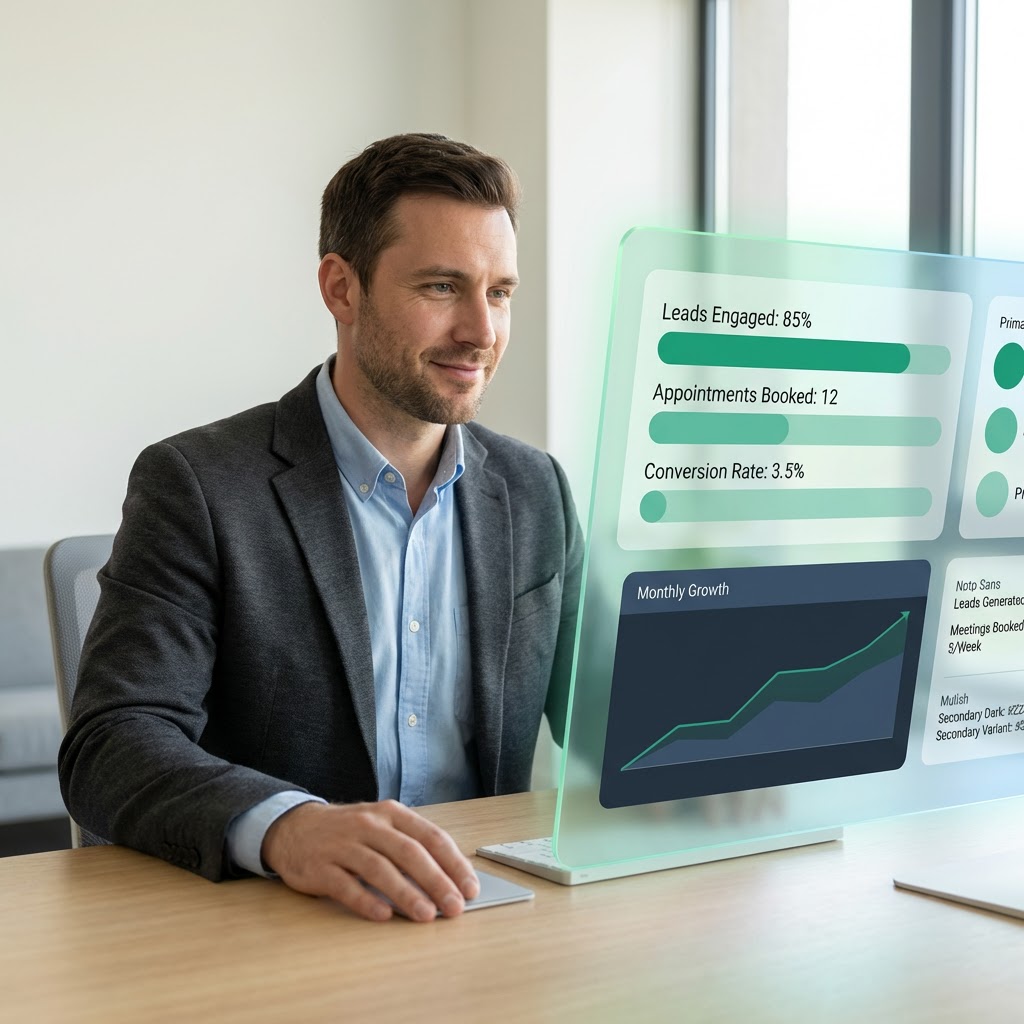
Sales enablement content strategy dashboard showing B2B sales cycle metrics and content performance analytics

Table of Contents

02 Apr 2026

Sales Enablement Content: Shorten Your B2B Sales Cycle by 40%

What Is Sales Enablement Content and Why Does It Shorten B2B Sales Cycles?

Sales enablement content is the strategic collection of resources — case studies, battle cards, ROI calculators, competitive guides, and objection-handling frameworks — that equip your sales team to close deals faster and more consistently. Unlike generic marketing collateral designed for brand awareness, sales enablement content maps directly to specific stages of the buyer journey and addresses the precise questions your prospects ask during active evaluation.

The business case is urgent. The average B2B sales cycle has expanded to 6.5 months as of 2025, up from 4.9 months in 2019 — a 33% increase that compounds across every deal in your pipeline (Gradient Works). Meanwhile, 84% of sales representatives missed quota in 2025, compared to just 53% in 2012 (Kondo). These aren't marginal shifts — they represent a structural crisis in B2B sales effectiveness that demands a systematic response.

Organisations implementing integrated sales enablement content strategies report 30% shorter sales cycles on average compared to companies with poor sales-marketing alignment (Revenue Memo). The global sales enablement platform market reflects this urgency — valued at $6.13 billion in 2025 and projected to reach $25.65 billion by 2034 at a 17.2% CAGR (Fortune Business Insights).

6.5 mo

Avg B2B Sales Cycle (2025)

Gradient Works

84%

Sales Reps Missing Quota

Kondo B2B Benchmarks

30%

Shorter Cycles With Enablement

Revenue Memo

$25.6B

Market Size by 2034

Fortune Business Insights

What you'll learn in this guide:

  • Which sales enablement content types produce measurable sales cycle compression — with data on each
  • How to map content to buyer journey stages and buying committee roles for maximum deal velocity
  • The 6-step framework for building a sales enablement content engine that shortens your B2B sales cycle by 40%
  • Why 91% of marketing content goes unused by sales — and the alignment architecture that fixes it
  • How AI-powered enablement is delivering 43% higher win rates and 37% faster cycles in 2025-2026

Key Takeaway

Sales enablement content is not about producing more marketing materials. It is about deploying the right content at the right moment in the buyer journey, mapped to specific stakeholder needs and sales process stages. Organisations that treat enablement content as a systematic infrastructure investment — not a marketing side project — achieve 30% shorter sales cycles, 7-14 percentage point win rate improvements, and measurable quota attainment gains.

Sales and marketing teams collaborating on enablement content strategy in a modern conference room with analytics dashboards

Which Sales Enablement Content Types Accelerate Deals the Most?

Not all sales enablement content delivers equal impact on deal velocity. The research is clear: specific content types produce measurable acceleration at distinct sales stages, while generic content accumulates in repositories without moving pipeline forward. Understanding which assets drive the greatest cycle compression allows you to prioritise resource allocation toward high-impact content rather than distributing effort across an undifferentiated content library.

Sales representative preparing personalised proposal content for a B2B client using CRM data and enablement templates

Case studies rank as the single most influential content type across B2B purchase decisions. 73% of B2B buyers read case studies before making purchasing decisions, and companies deploying them strategically report conversion rate increases of up to 300% (SocialTargeter). For mid-market SaaS companies, case studies featuring customers of comparable size and vertical orientation deliver the strongest persuasive impact because buying committees can envision similar outcomes within their own context.

ROI calculators address a critical bottleneck in B2B sales cycles — the financial justification stage. When CFOs participate in 79% of software purchase decisions (UnboundB2B), your content must convert abstract value propositions into concrete financial metrics. Interactive ROI calculators that let prospects input their own variables — team size, current process costs, time spent on manual tasks — drive up to 300% conversion rate increases by creating psychological ownership of the analysis (Dock).

Battle cards accelerate cycle velocity through faster objection resolution. These one-page reference resources equip reps with immediate access to competitive intelligence, pricing guidance, and positioning talking points without requiring mid-call research (Dock). Organisations involving enablement in competitive analysis and battle card development report 3 percentage point win rate improvements (Highspot).

Competitive comparison guides designed for prospect consumption drive 12% longer buyer engagement times when integrated into coordinated sales plays (Highspot). Unlike internal battle cards, these guides maintain factual accuracy while highlighting your relative capability strengths and unique positioning.

Content TypePrimary ImpactKey MetricBest Sales Stage
Case StudiesBuilds trust, demonstrates outcomes73% of buyers read before purchaseConsideration / Decision
ROI CalculatorsEnables financial justificationUp to 300% conversion increaseDecision
Battle CardsFaster objection handling+3pp win rate improvementConsideration
Comparison GuidesReduces purchase uncertainty12% longer engagement timeConsideration
Sales PlaybooksStandardises rep execution32% lower engagement challengesAll Stages
Objection HandlersMaintains deal momentumFaster negotiation resolutionNegotiation

Sources: SocialTargeter, Highspot, Dock

Why Does 91% of Marketing Content Go Unused by Sales Teams?

The most expensive sales enablement problem isn't content creation — it's content waste. Research shows that 91% of marketing-created content goes unused by sales teams due to fundamental misalignment between what marketing produces and what sales actually needs during live conversations (Revenue Memo). This disconnect costs businesses an estimated $1 trillion annually in wasted effort and lost revenue globally.

The perception gap tells the story clearly: 59% of marketers believe they understand what content sales teams need, but only 35% of sales reps agree — a 24 percentage point gap that manifests in repositories filled with long-form educational content while reps need concise, actionable resources deliverable within the time constraints of active sales conversations.

The consequences cascade through your entire lead generation and conversion infrastructure. 79% of marketing leads never convert into sales due to poor handoff processes, and 73% of marketing leads are never even contacted by sales due to qualification disputes (Revenue Memo). Meanwhile, 65% of sales reps report they cannot find content to send prospects despite its theoretical availability within marketing-managed repositories.

The fix is architectural, not incremental. Companies with aligned sales and marketing functions experience 28% higher lead-to-opportunity conversion rates, 30% shorter sales cycles, and 20% higher close rates on marketing-generated leads. This requires joint content planning where sales provides input on actual buyer conversation requirements, competitor concerns, and objection patterns — while marketing leverages these insights to prioritise content development that addresses real market needs.

Avoid This Mistake

Creating more content will not solve your enablement problem. 60-70% of B2B content created is never used because topic selection fails to align with buyer priorities or sales process requirements. Effective enablement requires rigorous governance — ensuring only high-performing, actively used content remains prominent while lower-performing assets are retired. Organisations using Content Scorecards report 25% improvement in content governance and 40% increase in time reps spend engaging with content (Highspot).

Key Takeaway

Sales-marketing misalignment is a revenue problem, not a communication problem. The organisations closing this gap treat it as an architectural challenge — installing shared metrics, joint content planning processes, and governance frameworks that connect content performance directly to pipeline outcomes. This is the same systems-first approach that drives the Freedom Machine methodology: eliminate structural inefficiencies before optimising individual components.

Digital sales enablement platform showing content library organised by buyer journey stages with case studies and ROI calculators

How Do You Map Enablement Content to the Buyer Journey for Maximum Velocity?

Content-to-stage mapping is the single highest-leverage action you can take to compress your sales cycle. Buyers complete approximately 67-68% of their purchasing journey independently before ever engaging sales (Sopro), reviewing an average of 11 content pieces with 72% starting their search online. If your enablement content doesn't reach prospects during this self-directed research phase, you've already lost velocity before the first sales conversation begins.

Awareness stage content addresses buyers who recognise a business problem but lack understanding of solution options. Deploy thought leadership, market research, and problem-definition case studies that establish your brand as a knowledgeable partner. Internal enablement content guides reps toward discovery conversations that identify pain points — not premature solution presentations. This is where They Ask, You Answer content strategy delivers its highest impact.

Consideration stage represents the critical window for cycle compression. Prospects are evaluating alternatives — this is where competitive comparison guides, interactive demonstrations, and customer success case studies accelerate decision velocity. Equip your reps with competitive intelligence, differentiation messaging, and CRM-integrated content delivery for this stage.

Decision stage content supports commitment and internal approval navigation. Customer testimonials from recent implementations, security documentation, pricing guides, and mutual action plans specify next steps and remove friction. The average B2B buying committee now comprises 10-11 stakeholders with enterprise deals reaching 15+ cross-functional decision-makers (UnboundB2B), so decision-stage content must address multiple personas simultaneously.

Buyer StageProspect-Facing ContentInternal Sales ContentImpact on Cycle
AwarenessThought leadership, market research, educational webinarsDiscovery question frameworks, qualification criteriaFaster initial engagement
ConsiderationCase studies, comparison guides, ROI calculators, product demosBattle cards, competitive intelligence, objection handlers30% cycle compression
DecisionCustomer testimonials, security docs, pricing guides, mutual action plansNegotiation playbooks, closing frameworksReduces approval delays
Post-SaleOnboarding guides, training content, best practice documentationExpansion playbooks, renewal content, upsell frameworksAccelerates time-to-value

Sources: Sopro, Highspot, UnboundB2B

How Should You Build Stakeholder-Specific Enablement Content for Complex Deals?

Multi-threading across multiple stakeholders boosts win rates by 130% for deals exceeding $40,000 in contract value (Gradient Works). Closed-won deals demonstrate approximately 2x more buyer contacts than lost deals — meaning your enablement content must address diverse constituent needs, not just your primary champion.

B2B executive reviewing vendor comparison materials and enablement content on tablet during procurement evaluation

CFOs participating in 79% of software purchase decisions need ROI calculations, payback period analyses, and total cost of ownership comparisons. Your enablement content for financial stakeholders should translate operational benefits into financial metrics — not feature lists. An AI ROI framework quantified in their terms converts abstract promises into investable business cases.

Technical evaluators — CISOs, IT directors, and engineering leads — focus on integration complexity, security architecture, and platform stability. Enablement content for this audience includes API documentation, security certifications, penetration testing results, and implementation timeline frameworks. This content must demonstrate technical rigour without sales language.

End users and operational teams evaluate workflow impact, training requirements, and daily productivity implications. Content showing productivity comparisons, training availability, and change management support addresses their primary concerns about adoption friction.

Champions within prospect organisations need internal selling tools — executive summaries they can forward upward, one-page business cases they can present to procurement, and success stories featuring peers at comparable companies. Equipping your champion with shareable content is one of the most underutilised tactics in B2B lead generation and conversion.

StakeholderPrimary ConcernEnablement Content NeededFormat
CFO / FinanceROI, payback period, TCOROI calculator, financial business case, cost comparisonInteractive tool, 1-pager
CISO / ITSecurity, compliance, integrationSecurity documentation, API docs, compliance certificationsTechnical brief, checklist
End UsersWorkflow impact, trainingProductivity comparisons, training guides, change management planDemo, video, comparison
ChampionInternal selling supportExecutive summary, 1-page business case, peer case studiesForwardable PDF, email
ProcurementVendor risk, pricing termsPricing guide, SLA documentation, reference contactsStructured document

Sources: UnboundB2B, Gradient Works

Ready to architect your sales enablement content engine? Our Growth Mapping Call diagnoses the specific content gaps slowing your sales cycle and maps the enablement infrastructure that closes them.

Book Your Growth Mapping Call

The 6-Step Framework for Building Sales Enablement Content That Cuts Cycles by 40%

Compressing your B2B sales cycle by 40% requires a systematic enablement content engine — not a content library. Teams using automated sales processes achieve average sales cycles of 63 days compared to 90 days with manual processes (VALiNTRY360). The following framework integrates content strategy, sales process alignment, and measurement into a self-reinforcing system.

1

Audit Your Current Content Against the Sales Process

Map every existing content asset to a specific sales stage and buyer persona. Identify which stages have content coverage and — critically — where gaps force reps to improvise. Most organisations discover 60-70% of their content clusters around awareness stage while consideration and decision stages remain underserved.

2

Install a Joint Sales-Marketing Content Planning Process

Establish bi-weekly planning sessions where sales provides input on active deal requirements, common objections, and competitive threats while marketing translates these into content priorities. This closes the 24-point perception gap between what marketing thinks sales needs and what sales actually requires.

3

Build Your Priority Content Stack by Deal Stage

Create the six core assets that produce maximum cycle impact: case studies mapped to your top three verticals, an interactive ROI calculator, competitive battle cards for your top five competitors, a mutual action plan template, a stakeholder-specific content kit (CFO, CTO, end-user versions), and a discovery question framework.

4

Deploy Content Within Your CRM Workflow

Integrate enablement content directly into your CRM and sales automation workflow so reps access the right content at the right pipeline stage without leaving their primary tool. Context-sensitive content recommendations reduce the 65% of reps who cannot find appropriate content to share with prospects.

5

Implement Content Scorecards and Governance

Track which content assets accelerate deals and which sit unused. Organisations using Content Scorecards report 25% improvement in content governance and 40% increase in rep engagement with content (Highspot). Retire underperforming assets monthly — less content that works beats more content that doesn't.

6

Connect Enablement Metrics to Revenue Outcomes

Measure what matters: sales cycle length by content exposure, win rate by content type, quota attainment by enablement programme participation. For every $1 invested in sales enablement, companies realise $4.53 in return — a 353% ROI (Hyperbound). But you can only prove this when you connect content metrics to pipeline outcomes.

How Is AI Transforming Sales Enablement Content in 2025-2026?

100% of enablement leaders now use generative AI to drive sales enablement performance as of 2025, and this isn't incremental adoption — it represents a fundamental shift in how enablement content is created, personalised, and delivered (Allego).

The impact is quantified and substantial. Organisations implementing strategic AI sales tool stacks report 43% higher win rates and 37% faster sales cycles compared to companies using fragmented, non-integrated approaches (MarketsandMarkets). Sales teams using AI-powered lead enrichment achieve 73% higher response rates and 42% shorter sales cycles compared to manual research. This is the agentic workflow paradigm applied to the entire sales content lifecycle.

AI-driven coaching delivers measurable capability improvements. Sellers receiving AI feedback retain 50% more information after 48 hours compared to those receiving only human coaching, because AI's structured written feedback improves memory encoding and consistency (Allego). The emerging model combines human coaching for trust, motivation, and resilience with AI agent automation for consistency, precision, and scale.

Predictive enablement — anticipating rep knowledge gaps before they manifest in missed opportunities — represents the next evolution. Rather than training reps only after performance gaps become evident, predictive systems analyse ongoing performance data, identify emerging deficiencies, and surface targeted guidance in real time. This shifts enablement from reactive training to proactive autonomous execution.

AI CapabilityImpact on Sales CycleQuantified Improvement
Strategic AI tool stackEliminates data silos, real-time recommendations43% higher win rates, 37% faster cycles
AI lead enrichmentReduces manual research time73% higher response rates, 42% shorter cycles
AI coaching + feedbackAccelerates rep skill development50% more information retained after 48 hours
Content personalisationScales stakeholder-specific messagingAutomated tailoring across buyer personas
Predictive enablementProactive gap identificationReal-time guidance before missed opportunities

Sources: Allego, MarketsandMarkets

What Sales Cycle Benchmarks Should You Target by Industry and Deal Size?

You can't compress what you don't measure. Understanding where your sales cycle stands relative to industry benchmarks reveals exactly which stages consume disproportionate time and where enablement interventions yield greatest impact. Sales channel selection alone can cut cycle length by 40% or more — content marketing achieves average cycles of 38 days for low-complexity products compared to 60 days for cold calling (Focus Digital).

Deal value directly correlates with cycle length: transactions under $700 close in approximately 25 days, while deals exceeding $500,000 consume 270 days on average. For mid-market SaaS companies targeting $50K-$200K contracts, the 90-120 day range represents the benchmark to beat. Inbound-generated pipeline consistently outperforms outbound on velocity — referral-based sales cycles average 35 days for medium-complexity products, versus 85 days for cold calling.

IndustryAvg Cycle LengthInitial ContactProposalNegotiationClosing
Software / SaaS90 days14 days30 days25 days21 days
Financial Services98 days16 days28 days30 days24 days
Consulting103 days18 days32 days28 days25 days
Technology121 days20 days35 days36 days30 days

Source: Focus Digital

Frequently Asked Questions

What is sales enablement content?

Sales enablement content is the complete collection of resources — case studies, battle cards, ROI calculators, competitive comparison guides, objection-handling frameworks, and sales playbooks — designed to equip sales teams with the right information at the right moment in the buyer journey. Unlike general marketing content aimed at brand awareness, sales enablement content maps to specific sales stages and buyer committee roles to accelerate deal velocity. Organisations with formal enablement content strategies report 30% shorter sales cycles and measurable win rate improvements of 7-14 percentage points compared to those relying on ad-hoc content creation.

How much can sales enablement content shorten the B2B sales cycle?

Research shows that organisations implementing integrated sales enablement content report 30% shorter sales cycles on average compared to companies with poor sales-marketing alignment. Teams using automated sales processes achieve 63-day average cycles versus 90 days with manual processes. AI-powered enablement stacks deliver even greater compression — 37% faster sales cycles and 43% higher win rates. For a mid-market SaaS company with a 90-day baseline, effective enablement content can compress cycles to 55-63 days, releasing significant capacity for scaling.

What types of sales enablement content have the biggest impact?

Case studies rank first — 73% of B2B buyers read them before purchasing decisions, with strategic deployment driving up to 300% conversion increases. ROI calculators rank second for their ability to satisfy CFO requirements and accelerate financial approval. Battle cards produce the most measurable win rate improvement (3 percentage points), while competitive comparison guides increase buyer engagement time by 12%. The highest-impact enablement programmes combine all four content types mapped to specific buyer journey stages.

Why do sales teams ignore most marketing content?

The data is stark: 91% of marketing-created content goes unused because it addresses marketing priorities rather than live deal requirements. The root cause is a 24-point perception gap — 59% of marketers believe they understand sales content needs, but only 35% of reps agree. The fix requires joint planning processes, shared metrics connecting content to pipeline outcomes, and governance frameworks that prioritise content effectiveness over content volume. When organisations close this alignment gap, they experience 28% higher lead-to-opportunity conversion and 20% higher close rates on marketing-generated leads.

How do you measure the ROI of sales enablement content?

Measure three categories: velocity metrics (sales cycle length by content exposure, time-to-close by stage), effectiveness metrics (win rate by content type, quota attainment by enablement participation), and efficiency metrics (rep time spent searching for content, content adoption rate, content-to-revenue attribution). For every $1 invested in sales enablement, companies realise $4.53 in return — a 353% ROI. Enablement teams with six or more members report 14 percentage points higher rep quota attainment (Highspot).

How does AI improve sales enablement content delivery?

AI transforms enablement across four dimensions: content personalisation (tailoring messaging to specific buyer personas and deal contexts at scale), predictive guidance (anticipating rep knowledge gaps before they affect deals), performance analytics (identifying which content assets actually accelerate pipeline), and administrative automation (eliminating manual research, data entry, and content search tasks). The result is quantified: organisations with strategic AI tool stacks achieve 43% higher win rates and 37% faster sales cycles. Sellers receiving AI coaching feedback retain 50% more information, making AI automation a force multiplier for enablement programmes.

Stop Losing Deals to Sales Cycle Friction

Your sales team is spending 70% of their time on non-selling activities. Your marketing content sits unused. Your sales cycle keeps expanding. peppereffect architects the sales enablement content infrastructure that compresses your cycle, aligns your teams, and installs the autonomous systems that scale without proportional headcount.

Book Your Growth Mapping Call
Learn how AI agencies architect enablement systems →

Resources

Related blog

Cold email domain architecture showing DNS authentication setup and deliverability infrastructure for B2B outreach
31
Mär

How to Build a Bulletproof Cold Email Domain Architecture

Split-screen visualization comparing traditional SEO search results with AI-generated answers from ChatGPT and Perplexity showing the evolving search visibility landscape for B2B companies
31
Mär

GEO vs. SEO vs. AEO: Understanding the New Search Visibility Landscape

LinkedIn profile optimization for B2B lead generation showing a high-converting professional profile architecture
30
Mär

How to Turn Your LinkedIn Profile Into a High-Converting Landing Page

THE NEXT STEP

Stop Renting Leverage. Install It.

Together we can achieve great things. Send us your request. We will get back to you within 24 hours.


Group 1000005311-1