

Why LinkedIn Dominates B2B Lead Generation in 2026
LinkedIn lead generation for B2B is no longer optional — it is the foundational infrastructure for every serious growth operation. The platform generates 80% of all B2B social media leads and delivers 277% greater lead generation effectiveness than Facebook and X combined, according to Sopro's 2025 Lead Generation Statistics report. With over one billion professionals and 67 million decision-makers on the platform, LinkedIn offers targeting precision that no other channel matches. cold email automation infrastructure
Yet most B2B companies approach LinkedIn the way they approach everything else: tactically. They send connection requests, publish occasional posts, and wonder why pipeline stays flat. The problem is not LinkedIn — the problem is the absence of a system. What separates companies generating consistent, qualified pipeline from those burning hours on manual outreach is architecture: a repeatable, measurable lead generation engine built on LinkedIn's unique infrastructure.
80%
B2B Social Leads
From LinkedIn, Sopro 2025
2.74%
Visitor-to-Lead Rate
vs 0.77% Facebook
121%
B2B ROAS
eMarketer Report, 2026
$408
Avg Cost Per Lead
28% lower than Google Ads
This article architects a systems-first approach to LinkedIn lead generation for B2B companies. We cover profile optimization, Sales Navigator deployment B2B sales automation pipeline, outreach sequencing, content strategy, and measurement — every component connected into a single operating system that compounds over time. Whether you are a SaaS founder SaaS lead generation without SDRs SaaS customer acquisition cost AI SaaS growth architecture scaling to $50M ARR, an executive search firm automating sourcing executive search automation, or a consultant building a Freedom Machine, the framework applies.
Key Takeaway
LinkedIn is not just another marketing channel — it is the B2B lead generation infrastructure. Companies that treat it as a system rather than a tactic generate 3–5x more qualified pipeline from the same effort.
The LinkedIn Lead Generation Framework: A Systems-First Approach
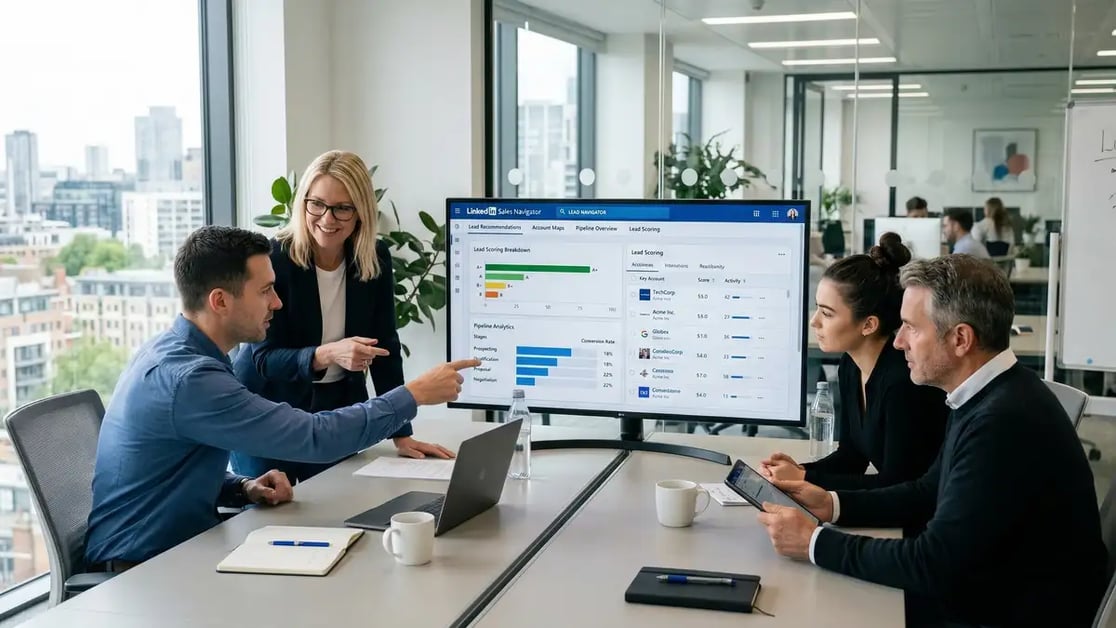
A systems-first approach to LinkedIn for B2B lead generation means engineering every component — profile, content, outreach, and measurement — as interconnected modules within a single architecture. Each module feeds the next. Profile optimization increases connection acceptance rates. Content builds authority that warms outreach. Outreach drives conversations that content alone cannot generate. And measurement identifies which modules need recalibration.
According to Sopro's State of Prospecting research, 89% of B2B marketers now use LinkedIn for lead generation, with 62% reporting that the platform successfully generates leads for their organizations. But the performance gap between top-performing and average campaigns is enormous — acceptance rates range from 10% to 45%, and response rates from 2% to 40%. That variance is not luck; it is architecture.
Architect Your Profile as a Landing Page
Your LinkedIn profile is the first thing prospects check before accepting connection requests. Replace resume-style headlines with benefit-focused value propositions. Profiles with benefit-focused headlines see 40–60% higher outreach effectiveness than those with generic job titles.
Deploy Sales Navigator for Precision Targeting
Sales Navigator's 50+ advanced search filters enable targeting by job title, company size, industry, technology stack, and LinkedIn Group membership. Users report saving 65 hours annually through AI-powered features and advanced search.
Build a Personalized Outreach Sequence
Generic connection requests yield 10–15% acceptance. Ultra-personalized outreach referencing specific prospect activity achieves 45% acceptance rates. The difference is strategic personalisation — not variable insertion.
Publish Authority-Building Content
LinkedIn's algorithm now rewards expertise-aligned content over generic engagement. Content that demonstrates domain authority generates warm inbound leads that convert inbound and outbound lead generation faster than cold outreach alone.
Measure, Iterate, and Compound
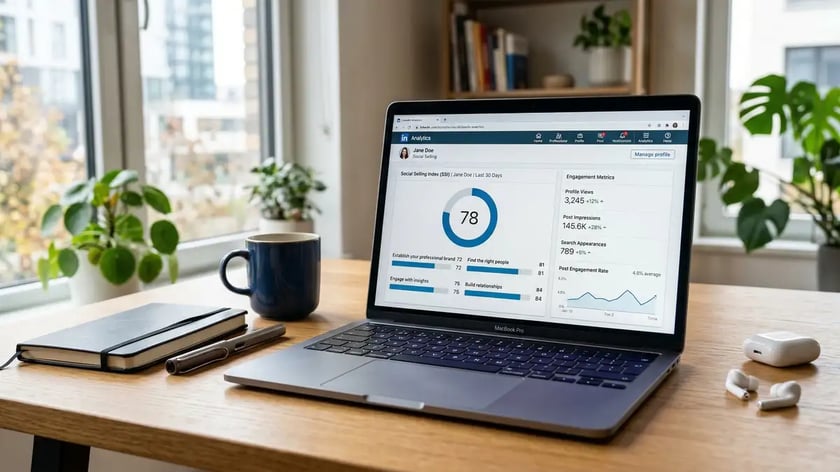
Track connection acceptance rate, message response rate, meetings booked, and pipeline generated. Representatives with higher Social Selling Index scores generate 45% more opportunities than lower-scoring peers.
Sources: Sopro Lead Generation Statistics 2025, Salesbread LinkedIn Statistics 2026
LinkedIn Sales Navigator for Lead Generation: ROI and Setup

LinkedIn Sales Navigator is the premium targeting engine that transforms LinkedIn from a networking platform into a systematic lead generation architecture. The investment question is straightforward: at $99.99/month for Core or $149.99/month for Advanced (with CRM integration), does the return justify the cost?
The data is unambiguous. Sales representatives equipped with four or more LinkedIn connections at target account ABM implementation guides close deals 16% more frequently, according to Skrapp.io's 2025 analysis. Sales Navigator users report saving approximately 65 hours annually through AI-powered features and advanced search filters — roughly one week of selling time recovered. More significantly, representatives with higher Social Selling Index scores generate 45% more opportunities than lower-scoring peers.
| Sales Navigator Tier | Monthly Cost | Key Features | Best For |
| Core | $99.99 | Advanced search, lead recommendations, InMail credits | Individual sellers |
| Advanced | $149.99 | Team collaboration, CRM integration, shared lists | Sales teams (5+) |
| Advanced Plus | Custom | Salesforce sync, data validation, dedicated support | Enterprise (50+ reps) |
Sources: Topo.io Sales Navigator Price Guide 2025, Skrapp.io Social Selling Analysis 2025
For B2B companies generating pipeline through LinkedIn, Sales Navigator is not a discretionary tool — it is core infrastructure. The 50+ advanced search filters enable precision targeting by job title, company size, industry, technology stack, and LinkedIn Group membership, directly strengthening the prospect identification pillar of your lead generation engine. Every additional connection at a target account compounds your probability of closing.
Key Takeaway
Sales Navigator's ROI compounds over time. The platform formalizes prospecting activities that distinguish high performers — making exceptional practices scalable and teachable across your entire sales organization.
LinkedIn Outreach Strategy: Connection Requests and InMail That Convert
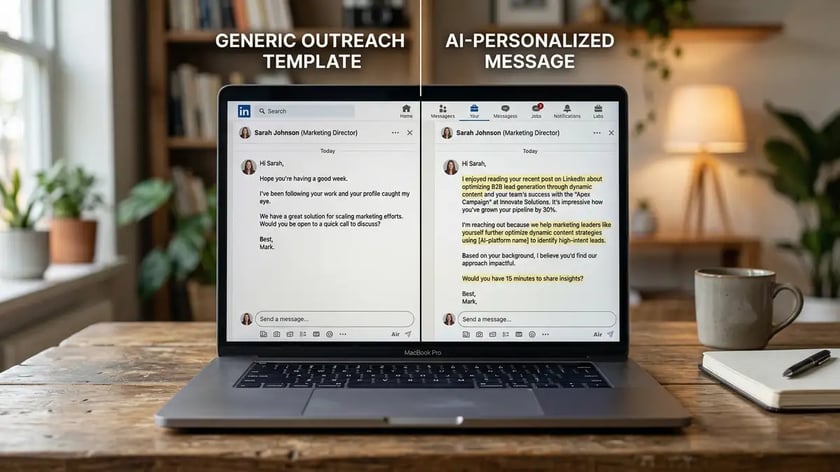
The linkedin outreach strategy that generates consistent pipeline in 2026 looks nothing like the spray-and-pray approach that worked three years ago. LinkedIn's algorithm has fundamentally shifted toward rewarding authentic engagement and penalizing automation, with pattern-recognition systems identifying non-compliant tools at 15–45% restriction rates regardless of volume limits.
Across 70,000 LinkedIn campaigns analyzed in H1 2025 by Expandi.io, average LinkedIn direct message response rates reached 10.3% — more than double the 5.1% average for cold email outreach. When messaging existing connections, response rates escalate to 16.86%, more than triple the cold email baseline. InMail response rates span 18–25% on average, with top-performing campaigns reaching 35–40%.
| Outreach Channel | Avg Response Rate | Top Performers | Key Success Factor |
| LinkedIn DM (new connection) | 10.3% | 25–35% | Personalisation depth |
| LinkedIn DM (existing connection) | 16.86% | 30–40% | Relationship history |
| LinkedIn InMail | 18–25% | 35–40% | Profile credibility + timing |
| Cold Email | 5.1% | 10–15% | Deliverability + subject line |
Sources: Expandi.io State of LinkedIn Outreach H1 2025, SendIQ InMail Benchmarks 2025
The data reveals three non-negotiable principles for LinkedIn outreach. First, personalization is the decisive factor — HubSpot research HubSpot Content Hub for driving B2B website traffic confirms that personalised InMails generate 3x higher response rates than generic templates. Second, timing matters: connection requests sent on Mondays achieve the highest acceptance rates at 22.04%, while messages sent Tuesday through Thursday between 8–10am or 2–4pm perform optimally. Third, follow-up sequences must be calibrated carefully — strategic second follow-ups increase responses by 4.05%, but excessive persistence generates diminishing returns.
Common Mistake
Relying on automation volume instead of personalization quality. LinkedIn's pattern-recognition systems restrict 15–45% of accounts using non-compliant automation tools — regardless of daily volume limits. The market has shifted from connection-based to engagement-based strategies.
Ready to architect a systematic LinkedIn outreach engine? Explore our Lead Generation Architecture.
Avoid This Mistake
Treating LinkedIn as a volume game instead of a systems architecture. Companies that send 100+ generic connection requests per week get restricted at 15–45% rates. The algorithm now rewards quality engagement over quantity — fewer, highly personalized touches outperform mass outreach by 3–5× on response rate.
Content Strategy for LinkedIn Lead Generation
LinkedIn's algorithm underwent fundamental transformation through the 360Brew initiative in 2024–2025, reducing organic reach by 65% from peak levels while rewarding expertise-aligned content. Company page reach collapsed to just 1.6% of followers — down from 7% historically. This is not a signal that content marketing on LinkedIn is dead; it is a signal that the strategy must evolve.
The new algorithm rewards three content attributes: expertise demonstration, audience relevance, and engagement quality. Personal profiles now outperform company pages by a factor of 5–7x on organic reach. Content that generates comments and saves — not just likes — receives algorithmic amplification. For B2B companies, this means shifting from broadcasting company updates to publishing insight-driven content through founder and executive profiles.
This shift directly impacts how to use LinkedIn for B2B lead generation. Content is no longer a separate initiative from outreach — it is the warming mechanism that makes outreach effective. When a prospect receives your connection request and visits your profile, the content they find determines whether they accept or ignore. According to Digital State Consulting's 2025 analysis, LinkedIn's visitor-to-lead conversion rate stands at 2.74%, substantially outperforming Facebook at 0.77%.
- Publish from personal profiles, not company pages. Personal accounts generate 5–7x the organic reach of company pages in LinkedIn's current algorithm.
- Focus on expertise demonstration. The algorithm now ranks content by domain authority alignment, not recency or network size.
- Create content that targets your prospect's problems. Every post should address a specific pain point experienced by your target persona — whether that is client onboarding friction, CRM inefficiency, or pipeline unpredictability.
- Use content to warm outreach sequences. Reference your published content in connection request notes. This transforms cold outreach into warm engagement.
Ready to build a systematic LinkedIn lead generation engine that compounds pipeline growth? Explore our proven framework.
View Lead Generation ServicesMeasuring LinkedIn Lead Generation Performance
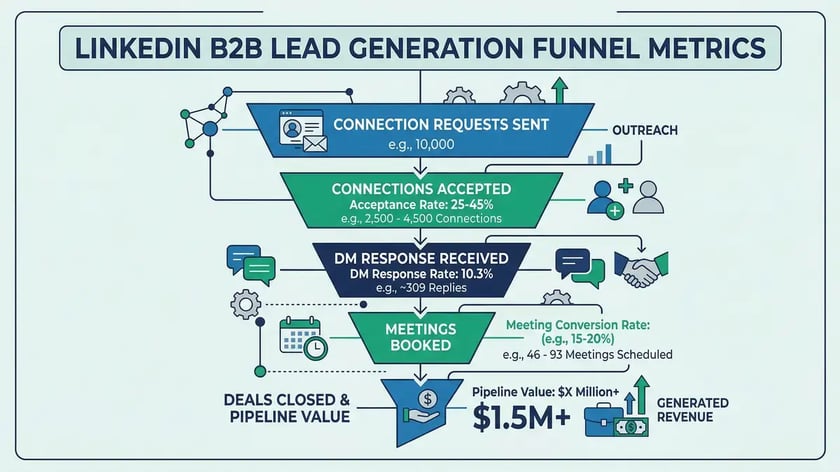
What gets measured gets managed — and most B2B companies measure the wrong LinkedIn metrics. Vanity metrics like post impressions and follower count tell you almost nothing about pipeline impact. The metrics that matter are those directly connected to revenue: connection acceptance rate, message response rate, meetings booked, and pipeline generated.
| Metric | Benchmark (Average) | Top Performer | Action If Below Benchmark |
| Connection Acceptance Rate | 25–30% | 45%+ | Improve profile + personalisation |
| DM Response Rate | 10.3% | 25–35% | Refine messaging + offer |
| InMail Response Rate | 18–25% | 35–40% | Improve targeting + timing |
| Meeting Conversion Rate | 2–5% | 8–12% | Strengthen CTA + follow-up |
| LinkedIn ROAS | 121% | 200%+ | Optimize ad targeting + offers |
Sources: Expandi.io H1 2025 Report, eMarketer LinkedIn ROAS Report 2026
The critical insight is that LinkedIn lead generation performance compounds over time. Unlike paid advertising where stopping spend stops results, a well-architected LinkedIn system builds a network, content library, and reputation that generates increasing returns. Sales Navigator adoption, when combined with systematic content publishing and personalized outreach, creates what we call a marketing infrastructure — an engine that runs whether or not you are actively working it.
Key Takeaway
Stop measuring impressions and followers. The only LinkedIn metrics that matter are acceptance rate, response rate, meetings booked, and pipeline generated. Everything else is a vanity metric that obscures whether your system is actually working.
Frequently Asked Questions
What is B2B lead generation on LinkedIn?
B2B lead generation on LinkedIn is the systematic process of identifying, engaging, and converting professional decision-makers into qualified sales pipeline using LinkedIn's platform, tools, and content ecosystem. Unlike consumer lead generation, B2B LinkedIn lead generation targets buying committees of 6–8 stakeholders across multiple departments, requiring multi-touch engagement strategies. LinkedIn generates 80% of all B2B social media leads, making it the dominant channel for professional prospecting.
Is LinkedIn Sales Navigator worth it for B2B companies?
Yes — for B2B companies actively generating pipeline, Sales Navigator delivers measurable ROI. At $99.99–$149.99/month, the platform provides 50+ advanced search filters, lead recommendations, and InMail credits that transform prospecting efficiency. Users report saving 65 hours annually, and representatives with higher Social Selling Index scores generate 45% more opportunities. The Advanced tier ($149.99/month) adds CRM integration and team collaboration features essential for sales teams of five or more.
How do you use LinkedIn Sales Navigator to generate leads?
Deploy Sales Navigator in four phases. First, build saved searches using advanced filters (job title, company size, industry, geography, technology stack) to identify your ideal customer profile. Second, save leads and accounts to organized lists for systematic engagement. Third, monitor buyer signals — job changes, company news, content activity — to time outreach optimally. Fourth, combine Sales Navigator targeting with personalized connection requests and follow-up sequences. Representatives with four or more connections at target accounts close deals 16% more frequently.
What is a good LinkedIn connection acceptance rate?
A good connection acceptance rate ranges from 25–45% depending on personalisation depth and targeting precision. Ultra-personalized outreach targeting decision-makers outside your existing network achieves approximately 45% acceptance. If your rate falls below 25%, the issue is typically either poor targeting (wrong audience) or insufficient personalisation (generic templates). Connection requests sent on Mondays achieve the highest acceptance rates at 22.04%.
How does LinkedIn lead generation compare to cold email?
LinkedIn outreach substantially outperforms cold email on response rates but operates at lower volume. LinkedIn direct messages achieve 10.3% average response rates versus 5.1% for cold email — a 101% performance advantage. InMail response rates reach 18–25% on average. However, cold email allows higher daily volume. The optimal approach for most B2B companies is a multi-channel sequence that uses LinkedIn for initial engagement and email for follow-up, as described in our sales administration framework.
What is social selling on LinkedIn?
Social selling is the discipline of using LinkedIn's platform to build relationships, establish credibility, and generate pipeline through content, engagement, and personalized outreach — rather than cold, transactional pitching. LinkedIn quantifies social selling effectiveness through the Social Selling Index (SSI), which measures four pillars: establishing your professional brand, finding the right people, engaging with insights, and building relationships. Top-performing representatives with high SSI scores generate 45% more opportunities and receive promotions 17 months faster than lower-scoring peers.
How much does LinkedIn lead generation cost?
LinkedIn lead generation costs vary by approach. Organic outreach requires time investment (2–4 hours daily) plus Sales Navigator ($99.99–$149.99/month). LinkedIn Ads average $408 cost per lead, 28% lower than Google Ads, with 121% ROAS — the only major platform delivering positive returns for B2B as of 2025. Organic LinkedIn generates leads at approximately $94 equivalent cost versus $178 for paid ads. The most cost-effective approach combines organic outreach with selective paid amplification through content optimized for AI visibility.
Ready to Architect Your LinkedIn Lead Generation Engine?
We help B2B founders install AI-powered lead generation systems that decouple pipeline growth from headcount. From Sales Navigator setup to outreach automation, we architect the infrastructure that compounds.
Explore Lead Generation Services
Book a Growth Mapping Call → B2B lead generation architecture
Resources
- Sopro: LinkedIn Lead Generation Statistics 2025
- Salesbread: LinkedIn Statistics for B2B Sales 2026
- Expandi.io: State of LinkedIn Outreach H1 2025
- SendIQ: LinkedIn InMail Benchmarks 2025
- Topo.io: LinkedIn Sales Navigator Price Guide 2025
- Skrapp.io: Social Selling Analysis 2025
- eMarketer: LinkedIn B2B ROAS Report 2026
- Lead Generation: The Demand Engine for B2B Growth
- Marketing Infrastructure: Building Your Growth Tech Stack
comparing cold email and LinkedIn outreach
LinkedIn for executive recruiters 7 lead generation systems every B2B founder needs
signal-stacked personalization playbook
CAC benchmarks and reduction levers
demand gen vs lead gen distinction
predictable pipeline framework
repeatable outbound system LinkedIn profile optimization for B2B